Baby Animals Embroidery Design Review
First Impression: Playful, Friendly, and Instantly Approachable
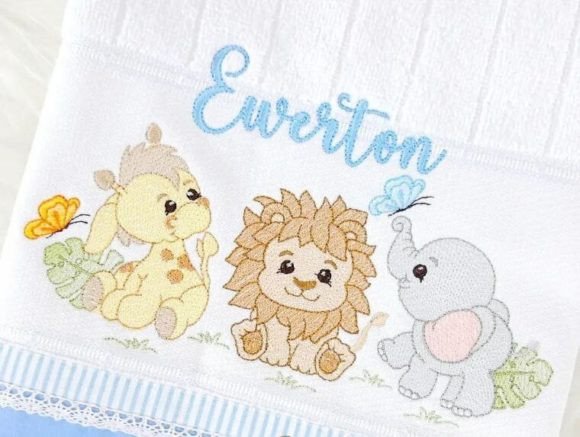
As an embroidery designer who’s developed hundreds of commercial designs for small businesses—from neighborhood bakeries to indie pet brands—I opened Baby Animals expecting charm. What I found was exactly that: a cohesive, joyful trio—giraffe, lion, and elephant—rendered with clear outlines and balanced proportions. The title and description signal warmth and accessibility, not whimsy-for-its-own-sake. That matters. For a café wanting embroidered aprons or a florist launching baby shower gift totes, Baby Animals reads as intentionally friendly—not childish, not cutesy, but genuinely inviting. It leans into handmade authenticity without sacrificing polish, making it ideal for brands that value approachability alongside professionalism.
Real-World Business Applications: Where This Design Shines
Baby Animals is unusually versatile across small business merch categories. As an embroidered patch, its three-animal composition creates visual interest without overcrowding—perfect for sew-on branding on tote bags, staff jackets, or boutique packaging tags. On aprons, it works beautifully centered above the pocket or subtly on the sleeve cuff, reinforcing brand identity without shouting. For cap embroidery, position it cleanly on the front panel (not curved crown) and it reads clearly at standard 2.25”–2.5” width—ideal for cafes, children’s studios, or family-run farms offering farm-to-table baby food.
In custom apparel, Baby Animals adds personality to work shirts for pediatric clinics, daycare centers, or craft supply shops—especially when paired with neutral thread colors like heather gray or navy. On tote bag design, it scales well up to 4”, holding detail while remaining legible from a distance. As a product label accent—think stitched onto organic cotton drawstring bags for handmade soaps or baby blankets—it elevates perceived value by signaling care and intentionality. Etsy sellers will find it resonates strongly in listings for nursery decor, baby milestone kits, or gender-neutral gift bundles. And because it avoids text or complex gradients, it translates seamlessly into printable mockups for client presentations or social media previews.
Where to Use Baby Animals Thoughtfully
Like any machine embroidery design, Baby Animals performs best when matched to the right application. Avoid placing it on highly curved surfaces like baseball cap crowns or deep-dip tote bag gussets—distortion can blur animal features. At under 1.75”, fine details (like ear contours or facial expressions) may compress or disappear; always test stitch a 1.5” version before committing to tiny patches. On dark uniforms—especially black or charcoal—confirm thread color contrast: light tans, creams, or soft yellows often read better than pure white, which can appear dull or shadowed.
Stitch density matters too. If the original embroidery file packs high-density fills (common in detailed animal bodies), consider simplifying fill areas for textured fabrics like canvas tote bags or heavy-duty apron twill—excess density can cause puckering or stiffness. Likewise, avoid pairing Baby Animals with ultra-fine fabrics like lightweight rayon or silk charmeuse unless stabilizer and hooping are meticulously controlled. And remember: frequent washing (think daycare staff uniforms or reusable baby bibs) demands secure backing—always use cutaway or medium-weight tear-away stabilizer, never lightweight iron-on alone.
Brand Identity Impact: More Than Just Cute
Small businesses often underestimate how much a single embroidery design shapes perception. Baby Animals strengthens brand identity by projecting consistency, warmth, and reliability—qualities customers associate with trusted local services. A florist using it on staff aprons signals care and nurturing; a pet brand applying it to leash tags or bandana patches implies empathy and playfulness. That emotional resonance builds trust faster than slogans ever could.
Visually, it supports handmade presentation without looking amateurish—its clean lines and balanced spacing suggest professional execution, not clipart. When used alongside other design assets (like matching logo lettering or packaging icons), Baby Animals reinforces visual consistency across touchpoints. And because it’s inherently engaging, it boosts buyer engagement: parents pause longer on merchandise featuring recognizable animals, increasing dwell time and conversion likelihood—especially in Etsy search results or boutique window displays.
Practical Designer Notes Before You Stitch
Before cutting fabric or sending files to production, follow these tested steps:
- Test in black and white first. Print the embroidery file outline at actual size—does each animal read distinctly? Are silhouettes legible side-by-side?
- Check small-patch viability. Resize to 1.75” and inspect spacing between animals. If elements touch or merge, request a simplified version or adjust placement.
- Review thread color contrast. Run a physical sample on your target fabric—light threads on dark backgrounds often need a second layer or slightly heavier weight.
- Confirm hoop size compatibility. Most commercial machines handle this design easily, but verify maximum width/height against your smallest hoop before digitizing.
- Test on real fabric. Don’t rely on mockups alone—stitch a sample on your exact tote bag canvas or apron twill to assess drape, sheen, and stability.
- Use proper stabilizer. Cutaway for stretchy knits, medium tear-away for stable wovens, and fusible + tear-away combo for lightweight linens.
- Create a client-approved mockup. Show stitched samples beside your brand’s logo and palette—consistency builds confidence.
- Compare beside other design assets. Does Baby Animals harmonize with your existing embroidery file library—or does it clash in scale, line weight, or energy?
- Confirm commercial licensing. Since this is intended for small business merch, double-check that your digital embroidery file purchase includes rights for resale, branded patches, and customer-facing products.
Baby Animals isn’t just another embroidery file—it’s a strategic brand asset. When applied with intention, it transforms ordinary merchandise into memorable, emotionally resonant tools for connection. For small business owners and embroidery shops alike, it’s proof that thoughtful design doesn’t have to be complicated to be effective.