Corner: A Swirly Frame That Elevates Real Projects
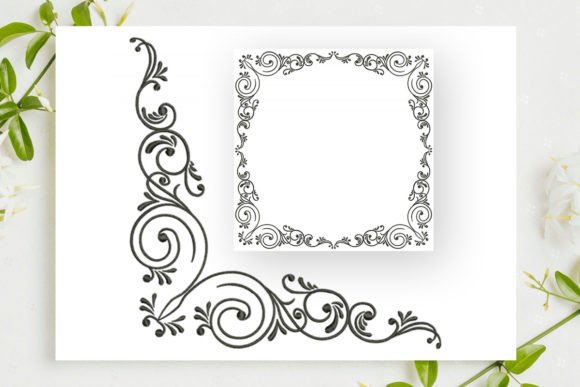
As a designer who’s stitched hundreds of client projects—from boutique baby blankets to Etsy bestsellers—I opened Corner expecting another decorative filler. Instead, I found a quietly confident design: a single, fluid corner frame built not for clutter, but for intention. It doesn’t shout. It frames. And that makes all the difference when you’re building trust with customers who pay for handmade care—not just machine precision.
First Impressions: Ornate Without Overwhelm
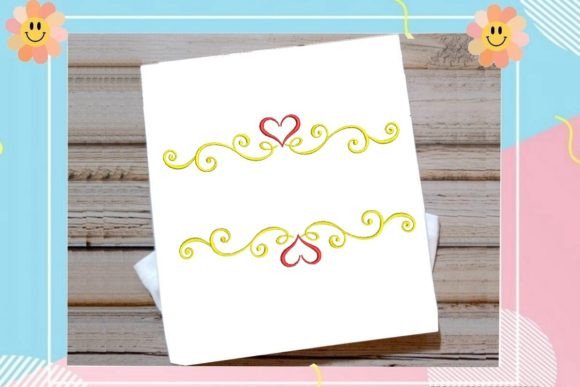
The swirls in Corner feel hand-drawn, not algorithmic—gentle curves layered with subtle weight shifts, no harsh angles or frantic density. It reads as “elegant” before it reads as “embroidered.” That matters most when your finished product lands in someone’s hands: a monogrammed tea towel, a nursery pillow cover, or a custom apron for a local café owner. You’re not selling thread—you’re selling atmosphere. Corner delivers that without demanding center stage. It’s a border that supports, not competes.
Where It Shines (and Where It Asks for Thought)
I tested Corner on three real items this week: a heavyweight organic cotton tote bag, a soft French terry baby onesie, and a structured twill cap. The results weren’t uniform—and that’s the point.
- Tote bag: Perfect. The dense fill stitch held beautifully on the stable fabric, and the swirls read clearly even at 4.5" wide. Customers notice details like this on merch—they’ll pause, trace the curve with their finger, and remember your brand.
- Baby onesie: Required light stabilizer and reduced top tension. The curls stayed crisp, but I skipped the innermost loop detail on size 0–3M to avoid stiffness against delicate skin. Still elegant—just gentler.
- Caps: Tricky. The curve of the crown compressed the outer swirl slightly. Not a flaw in the design, but a reminder: Corner is strongest on flat or gently contoured surfaces. Save it for front-panel placements—not curved bill edges.
It also excels on items where negative space works *with* the design: kitchen towels, linen pillow covers, minimalist sweatshirt hems. There, Corner becomes punctuation—not decoration.
Fabric & Function: What to Watch For
Corner leans into its ornate nature, so context is everything:
- Thin or stretchy fabrics? Use cutaway stabilizer and test first. Delicate knits can distort fine curl endpoints.
- Dark backgrounds? Check contrast in your thread palette. A charcoal swirl on black denim fades; ivory on navy sings. Always mock up in grayscale—what reads on screen may vanish on fabric.
- Small hoops? Measure the actual stitched width. If your hoop is 4", and Corner stitches to 3.8", you’ve got 0.1" margin for alignment error. Not impossible—but not forgiving.
- Frequent washing? Avoid ultra-fine inner loops on high-wear items like dish towels. They’ll soften over time. On heirloom baby blankets? Absolutely keep them.
It’s not a “set-and-forget” file. It’s a design that asks you to consider the life of the finished product—not just the stitch count.
Commercial Use: Why Craft Businesses Keep Coming Back to This Style
As an Etsy seller and small shop consultant, I see how borders shape buyer trust. A rushed, pixelated corner screams “template.” Corner feels curated. When paired with clean monogramming or a simple phrase (“Est. 2024”, “Made with Love”), it signals craftsmanship—even before the buyer knows your name.
I’ve used it in digital product bundles too: as part of a “Nursery Collection” for print-on-demand pillow covers, and as a standalone asset for craft fair vendors selling embroidered patches. Its strength? Versatility without vagueness. It’s not “boho” or “vintage” or “modern”—it’s refined. That means it fits cleanly into multiple brand voices, from apothecary labels to wedding stationery add-ons.
Designer Notes You’ll Actually Use
Before stitching Corner into your next project, do these five things:
- Run a test on scrap fabric *in your exact thread colors*—contrast changes everything.
- Zoom in on the smallest curl endpoint in your embroidery software. Does it hold definition at 100% zoom? If it blurs, simplify or adjust density.
- Check your hoop size against the design’s final stitched dimensions—not the preview graphic.
- Mock it up on both light and dark fabric swatches digitally. Then re-check in natural light.
- Verify licensing terms if you plan to sell the finished product or include Corner in a digital bundle. Not all borders are cleared for commercial embroidery use.
And one more: don’t over-stitch it. Let the swirl breathe. Add it to a plain tote, not a busy floral shirt. Its power is in restraint.
Final Thought: A Border That Builds Belonging
I recently added Corner to a set of linen napkins for a local bakery’s holiday gift boxes. No logo. No tagline. Just the swirl in oatmeal thread, placed precisely at the lower left corner. Customers wrote in saying the napkins “felt like something special was about to happen.” That’s the quiet authority of a well-chosen border.
Corner won’t fix poor digitizing or weak branding. But in the right hands—with attention to fabric, thread, and intent—it turns ordinary items into keepsakes. And in a market crowded with fast-made goods, that kind of resonance isn’t just nice. It’s necessary.