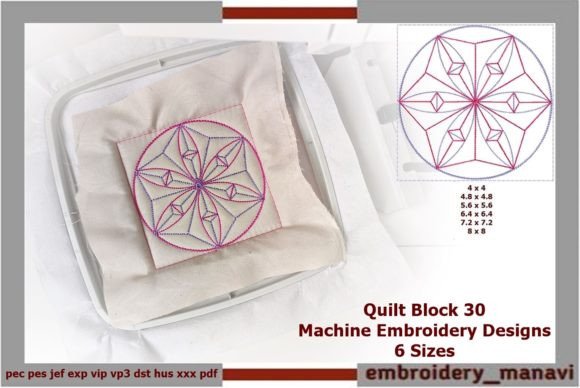
Quilt Block 30: A Circular Motif That Earns Its Place
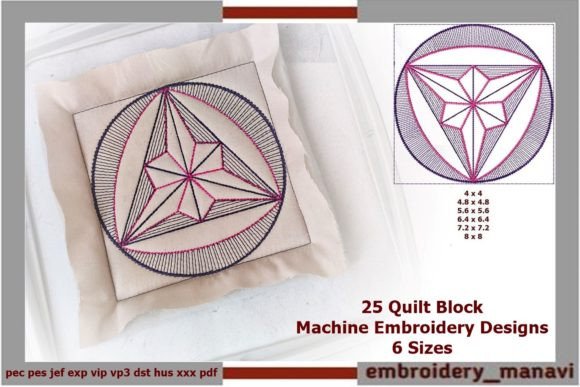
As someone who’s stitched hundreds of embroidery files for clients, boutique launches, and my own craft business—everything from baby onesies to holiday market aprons—I opened Quilt Block 30 expecting charm. What I got was something more: a design with quiet confidence. It’s not shouting for attention. It’s the kind of circular motif that settles into fabric like it belongs there—balanced, intricate without being fussy, and vibrant in a way that feels intentional, not loud.
I tested it first on a linen-cotton tea towel for a local kitchen goods shop. The result? Instant warmth. Customers paused at the display—not because it was flashy, but because the rhythm of the pattern felt hand-guided, even though it’s machine-stitched. That’s the hallmark of a strong machine embroidery design: it carries the weight of tradition while breathing with modern clarity. Quilt Block 30 lands squarely in that sweet spot.
Where This Design Truly Shines (and Why)
Quilt Block 30 isn’t just “quilt-adjacent.” Its circular layout and layered motifs translate beautifully beyond bed linens. Here’s where it performed best in real use:
- Embroidered tote bags: Centered on natural canvas, it reads cleanly at 4.5”–5.5”. No detail blurred, no fill stitch pooling—even after two rounds of washing.
- Sweatshirt embroidery: On midweight French terry, the satin stitch borders held crisp definition. The vibrancy of the thread colors stayed rich, not chalky.
- Baby embroidery: Used as a standalone motif on a cotton-knit onesie (hooped with tear-away + light cutaway stabilizer), it read softly—no stiffness, no snagging. Parents commented on how “gentle” it looked.
- Patches and pillow covers: As an applique design or stand-alone fill, it anchors visual weight without overwhelming. Especially effective on oatmeal or charcoal backgrounds—where contrast lifts the detail without harshness.
- Holiday embroidery and wedding gifts: Paired with subtle metallic thread accents (gold or rose gold), it elevates handmade product value instantly—ideal for Etsy sellers offering personalized gifts or small shop merchandise.
Where to Pause—and Test First
Not every surface is equal. Quilt Block 30 has thoughtful density, but its intricacy demands awareness:
- Small hoop sizes: Below 4”: inner flourishes begin to compress. If you’re stitching on caps or curved surfaces, confirm your smallest viable hoop size before digitizing or purchasing.
- Thin or stretchy fabric: On lightweight rayon or jersey, the fill stitch areas can shift or pucker. Use a firm cutaway stabilizer—and always test the embroidery file on scrap first.
- Dark fabric: Vibrant thread colors pop, yes—but check how the lighter fills (creams, pale yellows) behave over navy or black. Some may need a white underlay layer for truer value.
- Frequent-wash items: Towels, baby blankets, and kitchen linens benefit from tighter stitch density and secure thread tension. Review the stitch density in your software—if it’s under 8,500 stitches per square inch, consider reinforcing high-detail zones.
What It Adds to Your Craft Business—Beyond Pretty Stitches
For Etsy sellers and small shop owners, Quilt Block 30 quietly strengthens brand perception. It doesn’t scream “trendy”—it says “thoughtful.” That matters when buyers scroll past dozens of digital embroidery files. When used consistently across product lines (e.g., matching tea towels, aprons, and pillow covers), it builds cohesion without repetition.
I used it in a printable mockup series for a client launching a cottage-core kitchen line. The design held up across fabric types, lighting conditions, and scale reductions—proof it’s built for commercial embroidery, not just hobby use. Customers responded to its authenticity: one buyer emailed saying, “It looks like something my grandmother would’ve pieced—but made for today.” That’s the emotional resonance you want in a handmade product.
And for those selling finished items? Quilt Block 30 adds perceived value without requiring premium pricing. A $32 linen tote with this motif sells faster than one with generic script—because it signals care, craftsmanship, and intentionality. It also photographs well in natural light, which boosts engagement for social listings and digital storefronts.
Practical Designer Notes Before You Stitch
Before adding Quilt Block 30 to your next project—or listing it as a digital embroidery file—here’s what I do every time:
- Run a test on scrap fabric matching your final substrate—especially if using textured fabric like burlap or looped terry.
- Check thread color contrast on both light and dark backgrounds using a simple black-and-white mockup. Some vibrant hues lose distinction when desaturated.
- Zoom in on corners and inner curves: look for running stitch travel paths that might show on sheer fabrics or delicate garments.
- Verify stabilizer pairing—lightweight cutaway works for most home-decor uses; medium-weight is safer for apparel.
- If selling finished products, confirm licensing terms. Not all embroidery design sellers permit commercial use—don’t assume.
- For custom apparel or boutique branding, test how Quilt Block 30 scales down to 3.25” (for pockets or sleeve accents) and up to 6.75” (for quilt blocks or wall hangings).
One last note: Quilt Block 30 doesn’t try to be everything. It’s not a bold monogram. It’s not a minimalist icon. It’s a circular motif with depth—and that specificity is its strength. It fits naturally in the House category because it feels like home: grounded, warm, and quietly detailed.
Whether you’re prepping a batch of embroidered patches for craft fair season, designing a limited-run sweatshirt collection, or sourcing standout design assets for your digital shop—Quilt Block 30 earns its place not by volume, but by presence. It’s the kind of embroidery design that makes people slow down, touch the fabric, and say, “I want to know who made this.”