San Diego Silhouette Embroidery
First Impression: Clean, Coastal, and Quietly Festive
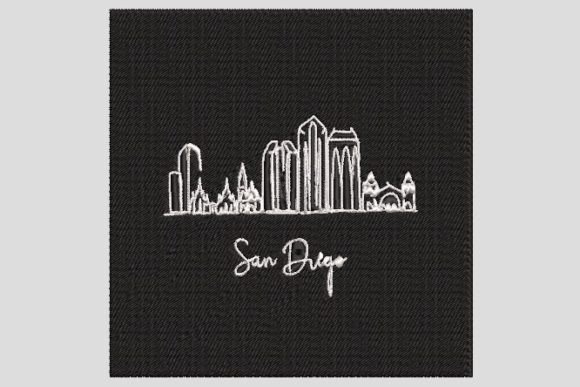
As an embroidery designer who’s prepped over 200 craft fair booths—from San Diego’s own Little Italy Mercado to snowy Midwest holiday markets—I opened San Diego expecting postcard charm. What I got was something sharper: a confident, mid-weight silhouette with clear coastal landmarks—no clutter, no cartoonish flair, just recognizable architecture softened by thoughtful negative space. It reads as modern but warm, minimalist but not cold. For Christmas, it leans into “coastal holiday” rather than tinsel or trees—think navy-and-cream tote bags beside eucalyptus garlands, not red-and-green sweaters. That subtlety is its superpower: it stands out without shouting.
Where San Diego Shines on Craft Fair Products
Tote bags: Ideal. The skyline scales beautifully across the front panel of a 15" × 15" natural canvas tote. At arm’s length, it reads instantly—no squinting, no confusion. Customers at craft fairs grab these first because they feel both personal and polished.
Aprons and tea towels: Strong secondary placements. On a denim apron bib, San Diego adds hometown pride without overwhelming function. On linen tea towels, it anchors the top third—elegant enough for boutique gifting, practical enough for daily use. Just avoid dense terry cloth; fabric texture eats fine line definition.
Embroidered patches and fabric pouches: Highly effective at 3"–4" width. The clean outline holds up well when heat-applied or sewn on. Perfect for bundling as small-shop products—pair a patch with a mini pouch and a handwritten tag for instant gift appeal.
Caps and pillow covers: Use caution. The silhouette works best on structured, flat-front caps—not curved visors—where distortion won’t blur the coastline. On 18" pillow covers, center it low (just above seam) for balance. Avoid placing it near zippers or seams where stitch density could pucker.
Market bags and handmade gifts: A standout. When stitched on unbleached cotton market bags, San Diego feels intentional, locally rooted, and quietly premium—exactly what buyers seek when choosing one handmade product over mass-produced alternatives.
What Makes San Diego Sell—And What Slows It Down
It sells because it’s legible. At 6 feet, customers recognize it as “San Diego”—not “some city.” That recognition builds trust fast in a crowded booth. It photographs cleanly for Etsy listings: no glare, no thread bleed, no need for heavy filters. And yes—it’s repeatable. You can batch-stitch 30 totes in under four hours if your hoop size and stabilizer are dialed in.
But here’s the reality check: San Diego isn’t forgiving on dark fabric without high-contrast thread. Navy thread on black twill? Fades into invisibility. And those delicate bridge outlines? They’ll vanish on thick, napped fleece or heavily textured dish towels unless you reduce stitch density or add lightweight tear-away stabilizer underneath.
Also—don’t assume it works at 1.5". Tiny lettering or micro-details aren’t mentioned in the description, but if the file includes subtle labeling (e.g., “San Diego, CA”), test it at 2" before committing to 100 patches. Clarity collapses fast below that threshold.
Booth & Brand Impact: More Than Just a Design
In person, San Diego elevates perceived value. It signals intentionality—this isn’t a generic script font slapped on fabric. It supports brand consistency for makers who sell regionally or curate location-based collections (e.g., “California Coast Series”). On a booth table layered with embroidered tea towels, folded pouches, and pinned-on patches, San Diego becomes a visual anchor—calm, cohesive, and conversation-starting (“Oh—you’re from San Diego?” “No, but I love it there!”).
Buyer engagement spikes when the design feels *of place*, not just *about place*. That emotional resonance—nostalgia, travel memory, hometown pride—is why it converts faster than abstract patterns at holiday markets.
Essential Embroidery Designer Notes Before You Stitch
- Always test on scrap fabric—especially if using textured towels, dark denim, or curved surfaces like caps.
- Check thread contrast before running a full batch. Light gray thread on oatmeal linen? Gorgeous. Same thread on heather charcoal? Nearly invisible.
- Review spacing and stitch density. If the skyline includes thin verticals (e.g., spires or palm trunks), ensure your machine doesn’t drop stitches on long jumps or tight corners.
- Confirm hoop size compatibility. Does San Diego fit comfortably in your most-used hoop—or will you constantly re-hoop, slowing production?
- Use the right stabilizer. Lightweight cut-away for stable wovens; tear-away for linens; fusible + tear-away combo for stretchy knits.
- Create at least one real mockup—not just a printable mockup. Drape it, hold it in natural light, walk away and look back. Does it pop? Does it read?
- Compare fabric colors side-by-side. A cream thread on off-white canvas looks warm. On ecru linen? Can read yellowish. Small shifts matter.
- Confirm commercial licensing before selling finished products. As a digital embroidery file, San Diego may require attribution or restrict resale—check the terms before embroidering your first 50 tote bags.
Final Thought: San Diego Isn’t Just a Design—It’s a Story Hook
In a sea of glitter, snowflakes, and Santa motifs, San Diego offers grounded warmth. It’s festive without being seasonal, local without being limiting, simple without feeling sparse. For Etsy sellers building a signature style, craft fair vendors chasing repeat buyers, and small shop owners curating meaningful handmade products—it’s not just another machine embroidery design. It’s a quiet invitation to pause, remember a beach walk, or gift something that feels truly seen. Just stitch it right—and let the skyline speak for itself.