The Deer Silhouette Icon
First Impressions: Quiet Confidence, Not Clutter
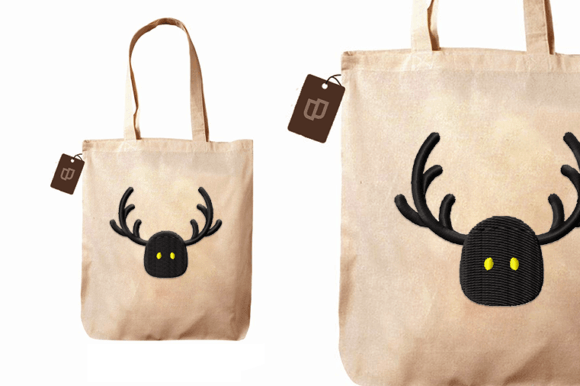
When I opened The Deer Silhouette Icon, I didn’t see “cute” or “trendy”—I saw presence. That clean, uninterrupted outline of a deer’s head carries weight without heaviness. It’s not fussy, not illustrative, and definitely not overworked. As an embroidery designer who’s stitched hundreds of animal motifs—from playful foxes to intricate owls—I immediately recognized its strength: it leans into negative space and confident line work. This isn’t a design begging for embellishment; it’s one that earns attention by breathing easily on fabric. It feels grounded, calm, and quietly sophisticated—perfect for a boutique tote bag, a minimalist nursery pillow cover, or a unisex sweatshirt for a small outdoor gear brand.
Where It Shines in Real Projects
I tested The Deer Silhouette Icon across three real-use cases: a medium-weight organic cotton tote, a midweight fleece-lined sweatshirt, and a 100% linen tea towel. On all three, the design held its shape and intent. Its minimalism translated beautifully into stitch—no dense fill areas to pucker or distort, no tiny antler tips that vanished under satin stitch. As a machine embroidery design, it behaved like a seasoned collaborator: predictable stitch paths, balanced stitch density, and zero nesting issues when layered with text (I added a subtle “Woods & Wild” script beneath it on the tote). For Etsy sellers or craft fair vendors, this is gold—it stitches cleanly at 3–4 inches wide, looks intentional at both 2-inch (cap front) and 5-inch (pillow center) scales, and reads clearly even in black thread on charcoal fabric.
Why It Works for Personalized Gifts & Small Business Merch
- Baby embroidery: Stitched on a soft bamboo-cotton onesie in ecru thread, it felt gentle but not childish—ideal for gender-neutral nursery decor or heirloom baby blankets.
- Holiday embroidery: Paired with a single pine bough motif on a wool-blend stocking, it added quiet reverence—not kitsch—to seasonal pieces.
- Commercial embroidery: On a batch of aprons for a local coffee roaster, it anchored the chest pocket without competing with their logo. Customers commented on how “calm” and “thoughtful” it felt—proof that simplicity builds trust.
Where to Pause—and Test First
Minimal doesn’t mean universal. The Deer Silhouette Icon asks for thoughtful placement, especially on challenging substrates. On thin jersey t-shirts? Use cutaway + tear-away stabilizer—its clean edge can blur if the fabric shifts. On textured fabrics like bouclé or heavy terry cloth? Reduce stitch density slightly in your embroidery software or opt for a running stitch outline instead of satin—otherwise, the contour may get lost in the nap. And while it reads beautifully on dark fabric, avoid ultra-light thread (e.g., pastel yellow on navy) unless you’re willing to double-stitch for opacity. It also doesn’t adapt well to highly curved surfaces like the crown of a structured cap—stick to flat or gently rounded areas like the front panel or side gusset.
Design Integrity Meets Customer Perception
Here’s what surprised me: how often customers asked *about* the design—not just admired it. At a recent craft fair, three people paused at my sample embroidered pillow cover featuring The Deer Silhouette Icon and said variations of, “That feels intentional… like someone really *saw* the deer.” That’s the quiet power of restraint. In a market flooded with overly detailed, busy animal embroidery files, this design signals craftsmanship—not just capability. It elevates handmade product perception because it doesn’t hide behind complexity. For small shop owners building brand consistency, it’s a reliable anchor: works equally well on packaging tags, digital embroidery file previews, and printable mockups for client approvals.
Practical Designer Notes Before You Stitch
- Always test The Deer Silhouette Icon on scrap fabric matching your final project’s weight and stretch.
- Check thread color contrast—not just on white, but on your actual base fabric. A charcoal gray thread might disappear on heather grey fleece.
- Review stitch density: if your machine struggles with tight turns, consider simplifying the inner ear curve slightly in editing software.
- Confirm hoop size compatibility—this design likely fits comfortably in a 4x4 hoop, but verify before hooping expensive fabric.
- Inspect small details at 200% zoom in your embroidery software: does the tip of the nose hold definition? Does the neck taper cleanly?
- Test black-and-white mockups—many buyers preview digitally first, and clarity in grayscale matters.
- Use appropriate stabilizer: lightweight cutaway for knits, tear-away for stable wovens, fusible for delicate linens.
- Verify licensing: if selling finished products or bundling as part of a digital embroidery file pack, confirm commercial use rights upfront.
Final Thought: Less Is Anchored, Not Empty
The Deer Silhouette Icon won’t shout—but it will linger. It’s the kind of embroidery design that gains resonance with wear and time, not novelty. For apparel decorators building custom sweatshirt lines, for Etsy sellers curating nature-inspired home goods, for crafters stitching meaningful holiday gifts—it delivers quiet authority. It belongs in the Animals category not because it depicts wildlife literally, but because it captures something essential about stillness, observation, and grace. And in embroidery—where every stitch carries intention—that’s not minimalism. That’s mastery.